Cabinet refacing vs. replacement: what each one costs in Connecticut
By Dana Whitfield · Updated 2026-08-17
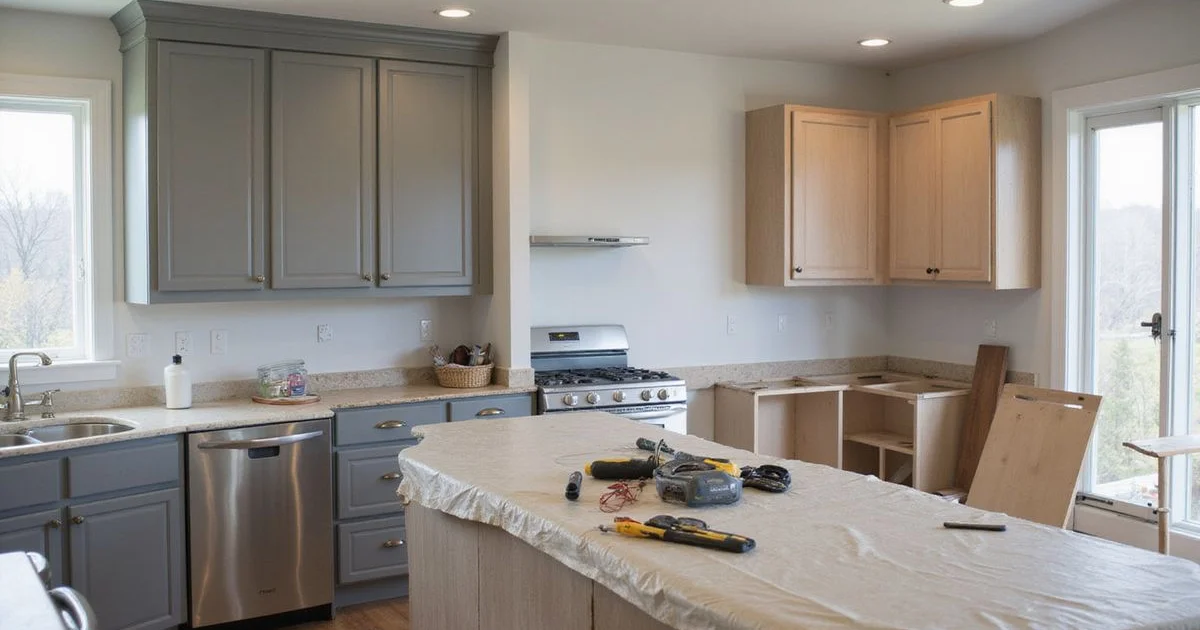
Cabinets usually eat up the largest share of a kitchen remodel budget, so the decision between refacing and full replacement is often the single biggest lever you have over the final price. Here is how the two approaches actually compare.
What refacing includes
Refacing keeps your existing cabinet boxes in place and replaces only what you see: new doors, new drawer fronts, and new veneer on any exposed box surfaces. The structure underneath, shelves, hinges mounting points, the frame, stays as-is unless it needs repair. That is why it costs less: you are not paying for new boxes or the labor to demolish and reinstall them.
What replacement includes
Replacement removes the old cabinets entirely and installs new ones, either stock (mass-produced in standard sizes) or custom (built to your kitchen’s exact dimensions). Replacement lets you change the layout, add or remove cabinets, or adjust cabinet depth and height, none of which refacing allows since it works within the existing footprint.
Cost comparison at a glance
| Approach | Relative cost | What you can change | Best fit |
|---|---|---|---|
| Refacing | Lowest | Doors, drawer fronts, hardware, finish | Boxes are structurally sound, layout stays the same |
| Stock replacement | Moderate | Full layout within standard sizing | Boxes are damaged or layout needs to shift |
| Custom replacement | Highest | Full layout, exact dimensions, wood species | Layout changes significantly or you want a specific finish |
For a number tailored to your own kitchen, this site’s cabinet refacing cost estimator takes the number of cabinets and your preferred approach and returns a planning range for each option side by side.

How to tell which one your kitchen needs
Open a few cabinet doors and drawers and check the boxes themselves, not just the doors. Look for water damage at the base, warping, or particleboard that has swollen and separated. If the boxes are sound and you are happy with the current layout, refacing gets you a new look for meaningfully less money. If the boxes are damaged, or you are dreaming of a different layout entirely, like adding an island or converting to a galley arrangement, refacing will not get you there and replacement is the honest answer.
It is also worth being realistic about how long you plan to stay in the house. Refacing extends the life of cabinets that are structurally fine but visually dated, which suits a shorter time horizon. Replacement is more of a long-term investment, especially with custom cabinetry, and tends to matter more if you are staying put for years or planning to sell and want the kitchen to show as fully updated.
Don’t overlook hardware and interior upgrades
Whichever approach you choose, the interior details often get decided almost as an afterthought, and they shouldn’t be. Soft-close hinges and drawer slides cost relatively little to add during either a refacing or replacement project and make a noticeable difference in daily use, cutting down on slamming and wear over time. If you’re refacing, ask whether interior shelving and drawer organizers can be updated at the same time even though the boxes themselves are staying, since it’s a good opportunity to improve function without the cost of full replacement.
What to expect during either project
A refacing project is faster and less disruptive since the boxes stay put; there’s no demolition of the structure itself, just removal of doors and drawer fronts and application of new veneer and hardware. A full replacement takes longer, since old boxes have to come out entirely and new ones have to be installed, leveled, and secured before doors and hardware even go on. If minimizing time without a working kitchen matters to you, that timeline difference is worth weighing alongside the cost.
Getting quotes for either approach
Because the price gap between refacing and full replacement is large, it is worth asking Connecticut cabinet specialists to quote both options for your kitchen rather than assuming which one you want going in. A remodeler who inspects your existing boxes in person can tell you definitively whether refacing is even structurally viable, which is not something you can judge from photos alone.
Compare kitchen cabinet specialists in your area and ask each one for a written quote on both approaches so you can see the real dollar difference for your specific kitchen before deciding. See our rating methodology for how we score the businesses in that comparison.
Frequently asked questions
- Is cabinet refacing actually cheaper than replacement?
- Almost always. Refacing keeps your existing cabinet boxes and only replaces doors, drawer fronts, and visible veneer, which cuts out both the material cost of new boxes and the labor to remove and reinstall them.
- When does refacing not make sense?
- When the boxes themselves are damaged, warped, or you want to change the layout. Refacing only makes sense if the underlying structure is sound, since it deliberately keeps that structure in place.
- Does custom replacement cost more than stock replacement?
- Yes, noticeably. Stock cabinets come in standard sizes and are mass-produced, while custom cabinets are built to your exact dimensions and wood choice, which adds both material and labor cost.
- Can I mix refacing and replacement in the same kitchen?
- Some homeowners reface the boxes they're keeping and replace a section entirely if they're adding a new layout element, like an island. Ask your remodeler whether this is practical for your specific kitchen before assuming it will save money.