Countertop materials compared: granite, quartz, quartzite and butcher block
By Dana Whitfield · Updated 2026-08-19
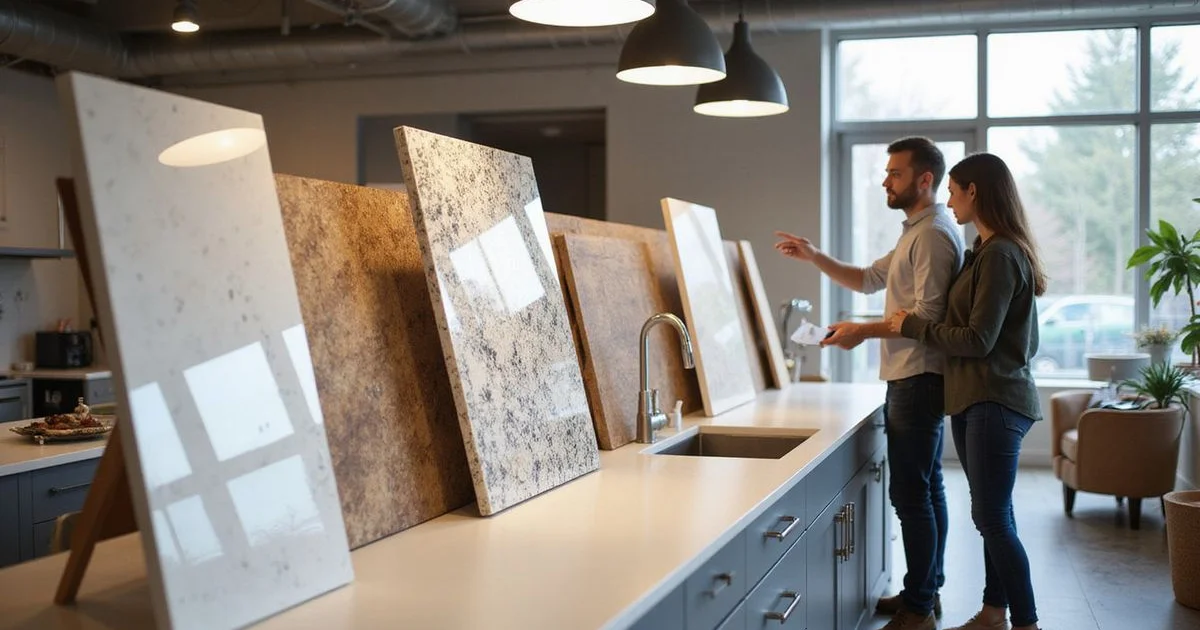
Once you have settled on cabinets, countertops are usually the next big material decision, and the options can look interchangeable in a showroom photo while behaving very differently in daily use. Here is how the main choices actually compare. If you have not settled on cabinets yet, our kitchen remodel process guide covers how each stage of the project actually unfolds.
Granite
Granite is a natural stone, quarried and cut into slabs, and every slab has unique veining and coloring since no two are exactly alike. It holds up well to heat and scratching, but it is porous, which means it needs periodic sealing to resist staining from oil, wine, and other kitchen spills. Left unsealed for too long, it can absorb liquids and discolor.
Quartz
Quartz counters are engineered stone: crushed natural quartz mixed with resin binders, then formed into slabs. Because it is engineered rather than quarried, quartz offers far more consistent color and pattern than granite, and it does not need sealing since the resin makes it non-porous. It handles daily wear well, though very high heat, like a hot pan set directly on the surface, can damage the resin over time.
Quartzite
Despite the similar name, quartzite is a completely different material: a natural metamorphic rock formed under heat and pressure, not an engineered product. It tends to be harder than granite and has a more subtle, marble-like look that appeals to homeowners who want a natural stone appearance without marble’s staining vulnerability. It is porous like granite and needs the same sealing routine.
Butcher block
Butcher block is wood, typically strips glued together in an edge-grain or end-grain pattern and sealed against moisture. It is the warmest-looking option and the friendliest to knives if you cut directly on it, but it is also the highest-maintenance: it needs regular oiling, is vulnerable to water damage if not resealed, and can scorch near a stove.

Side-by-side comparison
| Material | Maintenance | Heat resistance | Look |
|---|---|---|---|
| Granite | Periodic sealing | High | Bold, natural veining, no two slabs alike |
| Quartz | Low, no sealing needed | Good, avoid direct hot pans | Consistent pattern, wide color range |
| Quartzite | Periodic sealing | High | Natural, marble-like, subtle veining |
| Butcher block | High, needs regular oiling | Low, scorches easily | Warm, natural wood grain |
This site’s countertop cost calculator lets you plug in your square footage and preferred material to see how the choices stack up in dollars for your specific kitchen.
Edge profiles and seams affect the final look too
Once you’ve picked a material, edge profile and seam placement shape how the finished counter actually looks in your kitchen. A simple eased edge reads cleaner and more modern, while a bullnose or ogee edge adds a more traditional, decorative look. Seams are unavoidable on larger runs since slabs come in fixed sizes, so ask your installer where seams will fall and whether they can be positioned somewhere less visible, like away from the main sink area.
How to actually decide
Start with how you use your kitchen. If you cook daily and want a low-maintenance surface that shrugs off spills, quartz is the safer bet. If you want a one-of-a-kind natural look and do not mind resealing once or twice a year, granite or quartzite both deliver that. If warmth and a wood-block work surface for chopping matter more to you than low upkeep, butcher block earns its keep, especially as an island accent paired with a lower-maintenance material on the main run.
Budget matters too, and pricing does not always follow the order you would expect. Laminate remains the cheapest option by a wide margin if cost is the deciding factor, while marble, not covered above since it behaves more like a specialty material, sits at the very top for both price and required care.
Bring a sample of whatever material you are leaning toward into your actual kitchen lighting before committing. Showroom lighting can make quartz look warmer or granite look more uniform than it will under your kitchen’s daylight and fixtures. A countertop specialist can also walk you through seams and edge profile options once you have settled on a material, since those choices affect both the final look and the price.
Compare countertop installers in Connecticut to see samples in person and get quotes across the materials you are considering. Our rating methodology explains how those installers are ranked.
Frequently asked questions
- What is the most durable countertop material?
- Quartz and granite both hold up well to daily kitchen use. Quartz resists staining slightly better since it's non-porous, while granite needs periodic resealing to maintain that same resistance.
- Is quartz the same thing as quartzite?
- No, and the names cause real confusion. Quartz is an engineered material made from crushed stone bound with resin. Quartzite is a natural stone formed underground. They look similar in some finishes but perform differently.
- Does butcher block need special care?
- Yes. It needs periodic oiling or sealing to resist water damage and staining, and it's more vulnerable to scratches and burns than stone options, though scratches can often be sanded out.
- Which material is easiest to keep clean day to day?
- Quartz, generally, since it doesn't need sealing and resists stains without maintenance. Granite is close behind once properly sealed, while butcher block requires the most ongoing attention.